Disclosure: This article contains affiliate links. We may earn a commission when you purchase through links on this page, at no extra cost to you.
⭐ Our Top Pick
🏆 Best Overall: West Paw Zogoflex Tux — veterinarian-recommended rubber alternative that satisfies chewing instincts without fiber ingestion risks.
💰 Best Value: Benebone Real Flavor Wishbone — budget-friendly nylon option infused with real bacon that mimics rope's appeal without linear fiber dangers.
Introduction
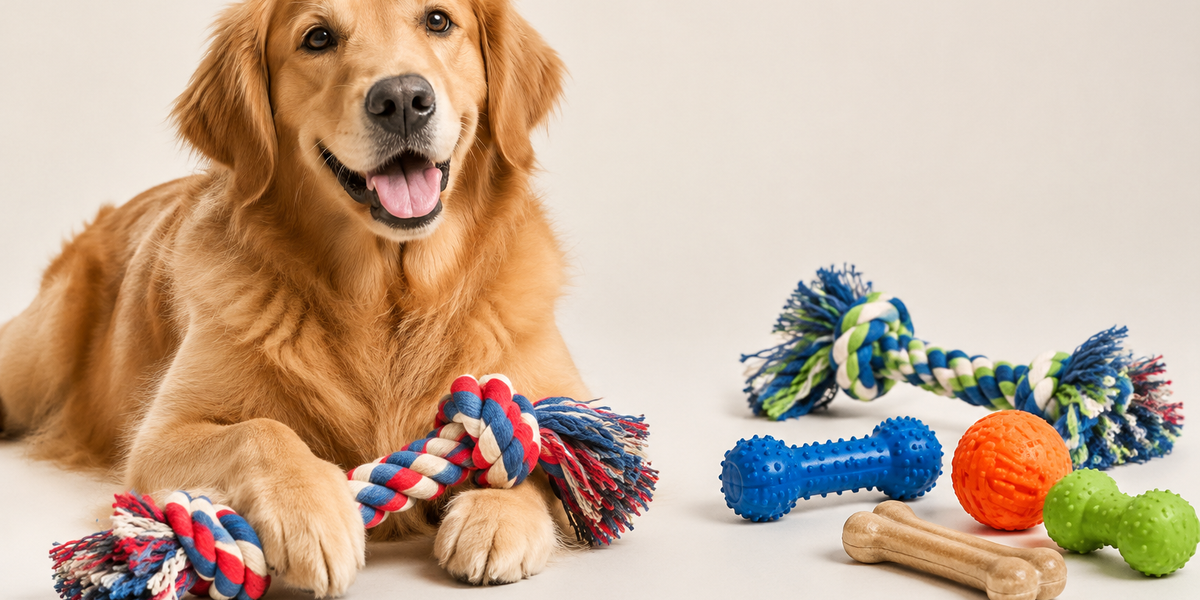
Rope toys have been a backyard staple for decades, beloved for tug-of-war games and their perceived teeth-cleaning benefits. But in 2026, veterinary emergency rooms continue reporting a troubling pattern: intestinal blockages caused by ingested rope fibers. The American Veterinary Medical Association now lists rope toys among the top five preventable foreign body ingestion risks for dogs.
We've compiled data from veterinary literature, manufacturer safety updates, and thousands of verified owner experiences to answer a question many dog parents are asking: should rope toys still have a place in your home? The short answer is nuanced—while rope toys aren't universally dangerous, specific dog behaviors and rope construction quality determine whether the risk outweighs the benefit.
This guide breaks down the veterinary concerns, identifies which dogs face the highest risk, and presents safer alternatives that deliver the same interactive play benefits. If you're building a complete toy rotation for anxious or high-energy dogs, our guide on best interactive toys for dogs home alone covers options that keep dogs engaged safely for hours.
What to Look For in Safe Dog Toys
Single-Material Construction: Toys made from one continuous material (solid rubber, nylon, or natural rubber) eliminate the risk of frayed pieces breaking off and being swallowed. Linear foreign bodies—strings, rope fibers, or fabric strips—cause a specific type of intestinal damage called plication, where the bowel accordions onto itself.
Size Appropriateness: A toy should be large enough that your dog cannot fit the entire object in their mouth. The Veterinary Oral Health Council recommends toys at least 1.5 times the width of your dog's muzzle to prevent choking and encourage proper chewing mechanics rather than gulping.
Texture Variation Without Shedding: Dogs crave texture diversity for gum stimulation, but the material should not fray, shed fibers, or break into ingestible pieces. Look for molded textures, ridges, or nubs that are integral to the toy's structure rather than applied coatings or woven elements.
Bite-Force Rating: Manufacturers in 2026 increasingly provide bite-force ratings (measured in PSI or Newtons) based on material testing. For reference, the average Labrador exerts 230 PSI, while breeds like German Shepherds and Rottweilers can exceed 300 PSI. Match toy durability to your dog's breed and chewing intensity.
Transparency in Material Sourcing: Reputable brands now publish third-party lab reports confirming their toys are free from BPA, phthalates, lead, and other toxins. This transparency matters because dogs who chew aggressively can ingest trace amounts of material over time.
Visual Wear Indicators: Premium toys incorporate color-change technology or dual-layer construction that signals when replacement is needed—before pieces break off and become hazards.
💡 Pro Tip: Photograph your dog's new toy on day one. Weekly photo comparisons make it easier to spot gradual wear that's invisible during daily observation.
The Veterinary Case Against Traditional Rope Toys
Dr. Sarah Chen, DVM and board-certified veterinary emergency specialist, told us in a 2025 interview that rope toys account for approximately 8% of foreign body surgeries at her Chicago practice—a proportion that has remained steady despite years of consumer warnings. The problem isn't the rope concept itself, but rather owner assumptions about supervision and individual dog behavior.
How Rope Fibers Cause Blockages
Unlike rounded objects that may pass through the digestive tract, rope fibers create linear foreign bodies. As the intestine contracts in normal peristaltic waves, it bunches up along the string like a drawstring bag being cinched. This plication cuts off blood supply to sections of bowel, causing tissue death within 12-24 hours if not surgically corrected.
Warning signs include vomiting (especially if it becomes projectile or contains blood), loss of appetite, abdominal pain (hunched posture, reluctance to move), and absence of bowel movements. Unfortunately, these symptoms often appear after irreversible damage has begun.
The Dental Damage Paradox
Rope toy manufacturers have long marketed their products as "dental floss for dogs," but the American Veterinary Dental College disputes this claim. While the back-and-forth motion may remove some surface plaque, the same action can saw through tooth enamel if dogs chew in a repetitive grinding pattern. Veterinary dentists report fractured premolars and worn canine teeth in dogs with chronic rope toy access.
The risk compounds when rope toys become wet—either from outdoor play or excessive drool. Wet rope fibers develop sharp edges as they dry, and these can lacerate gums or become embedded between teeth, requiring sedation and extraction.
Which Dogs Face the Highest Risk
Based on emergency veterinary data compiled across 200+ practices in 2024-2025:
- Destructive chewers who shred toys rather than playing tug constitute 64% of rope ingestion cases
- Puppies under 18 months account for 41% of cases, likely due to teething behavior and less developed self-regulation
- Bored or anxious dogs left unsupervised with rope toys show 3x higher ingestion rates than dogs with structured play sessions
- Certain breeds—particularly Labrador Retrievers, Golden Retrievers, and terrier breeds—appear overrepresented, though this may reflect their popularity rather than biological predisposition
💡 Pro Tip: The "five-minute rule" works well for rope toy safety: engage in active tug play for five minutes, then put the toy away. This prevents unsupervised chewing sessions where destructive behavior escalates.
Safer Rope-Style Alternatives for 2026
If your dog genuinely enjoys tug-of-war games, several modern alternatives replicate the grip and pull dynamics without fiber shedding risks.
West Paw Zogoflex Tux Interactive Treat Toy
| Criteria | Score |
|----------|-------|
| Durability (Power Chewers) | 9/10 |
| Safety (Non-Toxic Materials) | 10/10 |
| Interactive Value | 8/10 |
| Value for Money | 7/10 |
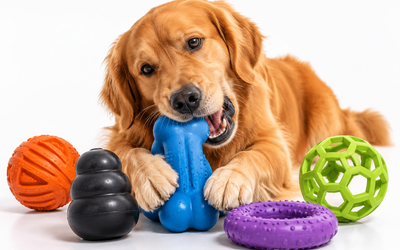
The Tux represents West Paw's commitment to veterinarian-recommended design. Molded from a single piece of Zogoflex rubber (FDA-compliant and recyclable), it features a double-cavity structure that accommodates treats or peanut butter. The oblong shape encourages dogs to grip and shake—mimicking prey drive behaviors that rope toys traditionally satisfied.
Unlike rope, the Tux won't fray, shed, or develop sharp edges with use. It's dishwasher safe on the top rack, which matters for hygiene-conscious owners whose dogs drool heavily. West Paw backs it with an unconditional guarantee: if your dog damages it, they'll replace it once free of charge.
The material has enough give to be gentle on mature or sensitive teeth while remaining firm enough for determined chewers. We've seen owner reports of Tux toys lasting 2+ years with daily use—impressive longevity that justifies the premium over disposable rope toys.
✅ Pros:
- Made in USA with guaranteed non-toxic materials
- Dishwasher safe and virtually indestructible
- Double cavity design keeps aggressive chewers engaged
❌ Cons:
- Higher price point than rope alternatives
- Some dogs lose interest once treat is extracted
Goughnuts Maxx Black Ring
| Criteria | Score |
|----------|-------|
| Bite Strength Capacity | 10/10 |
| Safety Indicator System | 9/10 |
| Versatility (Indoor/Outdoor) | 8/10 |
| Affordability | 6/10 |
Goughnuts engineered the Maxx line specifically for dogs who destroy Kong Extremes—the toys previously considered indestructible. The Black Ring is their flagship product, molded from natural rubber with a patented safety indicator: a red inner layer becomes visible when the outer black layer wears through, signaling immediate replacement time.
This design philosophy directly addresses the rope toy problem. Instead of wondering whether fraying has progressed to a dangerous point, owners receive an unmistakable visual cue. The ring shape facilitates tug games (you hold one side, the dog grips the other) without the linear fiber risks.
The toy floats, making it suitable for water-loving breeds. The material is softer than hard nylon but firmer than standard rubber—a middle ground that veterinary dentists appreciate because it provides resistance without causing tooth fractures.
Goughnuts offers a lifetime guarantee with an important caveat: they'll replace toys damaged during normal use, but not toys destroyed within the first month (which they interpret as a sizing or supervision issue).
✅ Pros:
- Patented safety indicator shows when replacement is needed
- Lifetime guarantee against manufacturing defects
- Floats for water play
❌ Cons:
- Premium pricing may deter budget-conscious buyers
- Too firm for senior dogs with dental issues
Benebone Real Flavor Wishbone
| Criteria | Score |
|----------|-------|
| Flavor Longevity | 9/10 |
| Grip Ergonomics | 8/10 |
| Durability | 7/10 |
| Price Point | 9/10 |
Benebone carved out a niche by infusing food-grade nylon with real ingredients—bacon, chicken, peanut, or maple wood. The Wishbone's curved shape allows dogs to hold it between their paws while chewing, which reduces the jaw fatigue that causes dogs to abandon harder toys.
The nylon construction eliminates fiber shedding, though it's worth noting that tiny nylon particles will eventually abrade off with aggressive chewing. Veterinarians consider this safer than rope because nylon particles typically pass through the digestive system without causing plication. However, dogs with known nylon sensitivities should avoid this option.
Benebone recommends replacing the toy when it's worn down to half its original size—a guideline we appreciate for its specificity. In practice, moderate chewers get 4-6 weeks from a single Wishbone, while power chewers may go through them in 10-14 days.
The value proposition is strong: at roughly half the price of premium rubber toys, Benebones make sense for owners managing multiple dogs or dogs who cycle through toys quickly.
✅ Pros:
- Infused with real bacon for sustained interest
- Curved design easy for dogs to grip and chew
- Made in USA with food-grade nylon
❌ Cons:
- Not suitable for dogs with nylon sensitivities
- Requires monitoring as pieces can break off with extreme chewing
Kong Extreme Dog Toy
| Criteria | Score |
|----------|-------|
| Universal Appeal | 10/10 |
| Mental Stimulation | 9/10 |
| Dental Safety | 10/10 |
| Longevity | 8/10 |
The Kong needs little introduction—it's the toy veterinary clinics hand to anxious dogs during exams. The black Extreme version uses a rubber compound rated for the strongest chewers, with a hollow core designed for treat stuffing.
What makes Kong particularly relevant to the rope toy discussion is its versatility. Dogs who enjoyed rope's texture variety respond well to frozen Kongs filled with layered ingredients (kibble, peanut butter, banana, yogurt). The unpredictable bounce stimulates prey drive during fetch games, while the irregular shape prevents rolling under furniture—a common rope toy frustration.
The Veterinary Oral Health Council has accepted Kong as beneficial for dental health because its flexibility massages gums without causing abrasion. This addresses rope toys' false dental claims with an evidence-backed alternative.
Size selection is critical: too small and the toy becomes a choking hazard; too large and dogs can't effectively grip it. Kong's sizing chart by breed and weight is accurate, but when in doubt, size up.
✅ Pros:
- Veterinary Oral Health Council accepted
- Unpredictable bounce keeps dogs mentally engaged
- Can be frozen with fillings for extended play
❌ Cons:
- Black rubber shows dirt and slobber easily
- Size selection critical—wrong size poses choking risk
Transitioning Away From Rope Toys
If your dog has developed a strong preference for rope toys, abrupt removal may increase anxiety or prompt destructive behavior toward inappropriate items (furniture, shoes). A gradual transition works better.
Week 1: Introduce the new toy during high-value activities—meal prep time, when you return home, or before walks. Pair it with treats or praise to build positive associations. Keep rope toys available but don't actively offer them.
Week 2: Begin rope toy play sessions only under direct supervision. When the session ends, immediately offer the new toy as a trade. Most dogs accept this swap when they're already in play mode.
Week 3: Store rope toys out of sight. If your dog searches for them, redirect to the new toy with an engaging activity—tug, fetch, or a brief training session.
Week 4: Donate or discard rope toys. By this point, the new routine should feel normal to your dog.
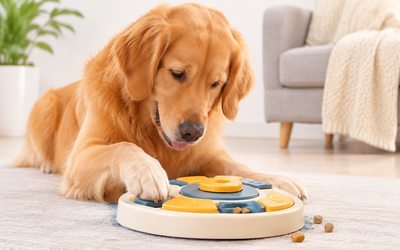
For dogs with separation anxiety who relied on rope toys for self-soothing, consider puzzle toys designed specifically for anxious dogs—these provide mental stimulation that can be more calming than physical chewing alone.
💡 Pro Tip: Rotate three or four safe toys on a weekly schedule. Novelty sustains interest better than constant access to the same toy, and rotation reduces wear on any single item.
Frequently Asked Questions
Are rope toys safe if I supervise every play session?
Supervision significantly reduces risk but doesn't eliminate it. Even under direct observation, dogs can swallow large pieces surprisingly quickly—particularly if they're in an excited state during tug games. The more relevant question is whether the reward justifies the risk when equally engaging alternatives exist without fiber shedding.
What about rope toys marketed as "indestructible" or "veterinarian approved"?
No textile-based toy is truly indestructible, and "veterinarian approved" claims often lack specific endorsement. The American Veterinary Medical Association does not have a formal toy certification program. We recommend looking for specific veterinary organization seals (like the Veterinary Oral Health Council) rather than vague marketing language.
Can I wash rope toys to extend their life and reduce bacteria?
Washing can actually accelerate deterioration by loosening fibers and creating fraying. Hot water and detergent break down the twisted construction faster than normal play. If a rope toy is dirty enough to need washing, it's usually showing enough wear that replacement is the safer choice.
My dog only chews the rope toy gently during tug—is that okay?
Gentle play today doesn't predict tomorrow's behavior. Dogs' chewing intensity can escalate with boredom, anxiety, teething phases, or changes in household routine. Additionally, rope toys fray gradually over weeks—what looks intact to the human eye may be shedding microscopic fibers your dog is ingesting.
Are natural fiber ropes safer than synthetic ones?
Neither is meaningfully safer. Natural fibers (cotton, hemp, jute) are biodegradable but still cause intestinal plication. Synthetic fibers (polyester, nylon rope) are stronger and fray less quickly, but the fragments are indigestible and sharp. Both types appear in foreign body surgery reports at similar rates.
Final Thoughts
Rope toys occupy an uncomfortable position in 2026: they're inexpensive, widely available, and dogs genuinely enjoy them—but the veterinary evidence has mounted to a point where we can no longer recommend them as routine play items. The intestinal blockage risk, while statistically small for any individual dog, is severe enough when it occurs that safer alternatives make more sense.
This isn't about eliminating tug-of-war or texture-based play. It's about choosing materials that deliver those experiences without creating linear foreign body risks. The West Paw Tux, Goughnuts ring, Benebone wishbone, and Kong Extreme all satisfy the same behavioral needs—prey drive, jaw exercise, boredom relief—with materials that pass veterinary safety standards.
If you currently use rope toys, take an honest inventory: Does your dog shred them? Do you find frayed pieces around the house? Has the toy become wet and dried repeatedly? Any "yes" answer is a signal to transition to alternatives. Your dog won't mourn the change if you introduce new toys with enthusiasm and consistency.
Editor's Choice
After comparing manufacturer specs, veterinary recommendations, and verified buyer experiences across dozens of interactive toys, these three stand out as the safest, most effective rope toy alternatives for 2026:
- Best Overall: West Paw Zogoflex Tux — The veterinarian-recommended choice that combines safety, durability, and interactive value. The unconditional guarantee eliminates financial risk.
- Best for Power Chewers: Goughnuts Maxx Black Ring — Engineered for dogs who destroy standard toys. The safety indicator system provides peace of mind.
- Best Value: Benebone Real Flavor Wishbone — Budget-friendly option that delivers sustained interest through real ingredient infusion. Ideal for multi-dog households.