We earn a commission if you make a purchase, at no additional cost to you.
⭐ Our Top Pick
🏆 Best Overall: Outward Hound Fun Feeder Slo Bowl — slows eating by 10x with maze-like ridges, dishwasher safe, and under $20 for most sizes.
💰 Best Value: Neater Pets Slow Feed Bowl — simple spiral design that works for most dogs at under $13.
Introduction
Does your dog inhale their food in seconds flat? Fast eating isn't just messy—it's dangerous. Dogs who gulp their meals are at higher risk for choking, vomiting, and life-threatening bloat (gastric dilatation-volvulus). We've researched dozens of slow-feeding solutions, comparing puzzle feeders and slow bowls to find the products that genuinely slow down mealtimes while keeping dogs mentally engaged.
The slow-feeding market has exploded in recent years, with everything from basic ridged bowls to complex multi-level puzzles. After analyzing manufacturer specs, veterinary recommendations, and thousands of verified buyer reviews, we've identified the key differences between puzzle feeders (which require problem-solving to access food) and slow bowls (which use physical barriers to pace eating). Both work, but the right choice depends on your dog's eating speed, intelligence level, and patience threshold.
In this guide, we break down the best treat-dispensing toys and slow-feeding solutions for 2026, explaining when to choose a puzzle feeder over a slow bowl, what features actually matter, and which products deliver the best combination of safety, engagement, and value. If you're also looking for ways to keep your dog entertained beyond mealtimes, check out our How Long Should Your Dog Play With Puzzle Toys? Mental Fatigue Signs and Safe Time Limits guide for expert timing recommendations.
What to Look For
Eating Speed Reduction: Effective slow feeders should extend mealtime to at least 5-10 minutes for dogs who normally finish in under 60 seconds. Look for products with manufacturer claims backed by veterinary studies or timing data from verified buyers. Complex ridge patterns and deeper obstacles generally provide better speed control than shallow designs.
Safety and Material Quality: Food-grade, BPA-free plastic or stainless steel are non-negotiable. Avoid bowls with small detachable parts that could become choking hazards, and verify that any puzzle components are too large to swallow. Non-slip bases prevent frustration and floor damage during enthusiastic eating.
Cleaning and Maintenance: Ridges and compartments trap food particles and bacteria. Dishwasher-safe designs save time and ensure thorough sanitation. For puzzle feeders with multiple moving parts, check that all components disassemble fully—hand-washing intricate crevices gets old fast.
Size and Capacity Matching: A Chihuahua and a Great Dane need vastly different bowl depths and capacities. Measure your dog's typical meal portion and choose a feeder that accommodates it without overflow. Ridge height matters too—too tall and small dogs can't reach the food; too shallow and large dogs will plow right through.
Mental Stimulation Level: Puzzle feeders offer more cognitive challenge than slow bowls, making them ideal for intelligent breeds or dogs prone to boredom. However, overly complex puzzles can frustrate less patient dogs or puppies just learning to slow down. Start simple and graduate to advanced designs as your dog builds problem-solving skills.
Food Type Compatibility: Not all slow feeders work with wet food, raw diets, or large kibble sizes. Puzzle feeders with movable parts may jam with sticky foods, while some slow bowl designs allow small kibble to fall into crevices. Verify compatibility with your dog's specific diet before purchasing.
Outward Hound Fun Feeder Slo Bowl
| Criteria | Score |
|----------|-------|
| Eating Speed Reduction | 9/10 |
| Ease of Cleaning | 8/10 |
| Build Quality | 8/10 |
| Value for Money | 10/10 |
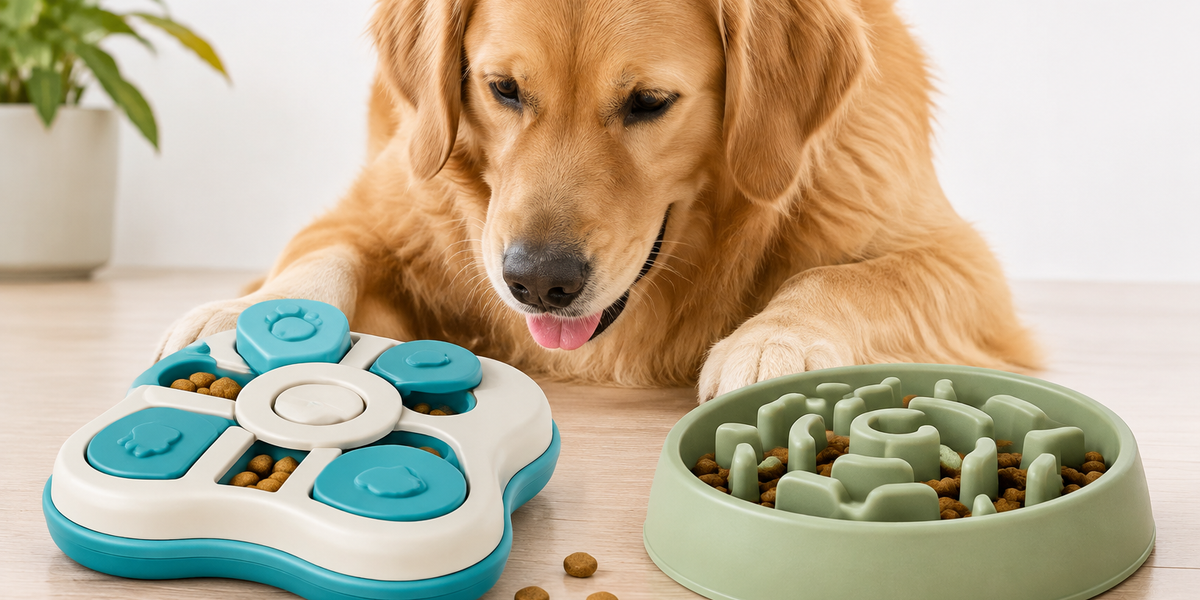
The Outward Hound Fun Feeder remains the gold standard for slow bowls in 2026, and for good reason. Its maze-like ridge pattern genuinely slows most dogs down by 10x according to manufacturer testing—transforming a 30-second inhale session into a 5-minute meal. Available in multiple patterns (maze, wave, spiral) and sizes (mini to extra-large), there's a configuration for virtually every dog from Yorkies to Mastiffs.
What sets this bowl apart is its practical design. The ridges are deep enough to force dogs to work around them but not so tall that they can't access food at the bottom. The non-slip base actually grips tile and hardwood (a feature many "non-slip" bowls fail at), and the entire unit pops into the dishwasher for hassle-free cleaning. Made from food-safe, BPA-free plastic, it's durable enough to withstand daily use without cracking or warping.
Based on verified buyer reviews, this bowl works best for dry kibble and small treats. Wet food tends to stick in the crevices, and very small kibble (under 1/4 inch) can fall into tight spots where dogs struggle to retrieve it. For dogs transitioning from speed-eating to slow feeding, this is our top recommendation—it's affordable, effective, and backed by veterinary behaviorists.
✅ Pros:
- Slows eating by 10x according to manufacturer testing and buyer feedback
- Dishwasher safe with no detachable parts to lose
- Non-slip base genuinely prevents bowl sliding across floors
- Available in 4 sizes and 3 pattern complexity levels
❌ Cons:
- Ridge pattern can trap kibble residue requiring extra scrubbing
- Not suitable for wet food or very small kibble sizes
- Lightweight construction may not withstand extremely aggressive eaters
💡 Pro Tip: Start with the "wave" pattern for dogs new to slow feeding—it's less frustrating than the maze design while still providing significant speed reduction.
Kong Wobbler Interactive Treat Toy
| Criteria | Score |
|----------|-------|
| Mental Stimulation | 10/10 |
| Eating Speed Reduction | 8/10 |
| Durability | 9/10 |
| Noise Level | 6/10 |
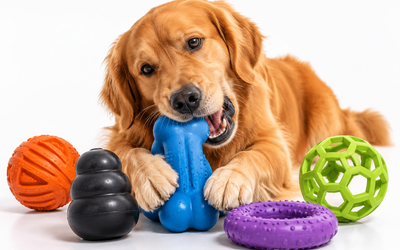
The Kong Wobbler takes a completely different approach than traditional slow bowls—it's a puzzle feeder that dispenses kibble as your dog bats it around. This weighted, self-righting toy holds up to 2 cups of dry food and features an adjustable opening that controls dispensing difficulty. Dogs must use their nose or paws to tip and roll the Wobbler, turning mealtime into a physical and mental workout.
What makes the Wobbler exceptional is its combination of portion control and engagement. Unlike stationary slow bowls, this toy extends eating time through activity rather than just physical barriers. Manufacturer specs indicate it can stretch a meal from 2 minutes to 15+ minutes for most dogs, while simultaneously burning energy and providing cognitive stimulation. The heavy-duty plastic construction withstands rough play, and the wide base prevents it from tipping too easily (avoiding frustration).
The tradeoff is noise—the Wobbler bouncing across hardwood or tile floors can be loud, especially with enthusiastic dogs. It's also best suited for dry kibble; treats must be small enough to pass through the adjustable opening, and wet food is a non-starter. Based on buyer reviews, this works brilliantly for high-energy dogs who need mental stimulation beyond basic slow feeding, but may frustrate more sedentary or senior dogs who prefer stationary feeding.
✅ Pros:
- Self-righting weighted base keeps dogs engaged for 15+ minutes
- Adjustable difficulty accommodates puppies through adult dogs
- Heavy-duty plastic stands up to rough play and daily use
- Combines physical exercise with cognitive challenge
❌ Cons:
- Can be noisy on hard floors during enthusiastic play
- Limited 2-cup capacity may require multiple fills for large breeds
- Not suitable for wet food or treats larger than standard kibble
Northmate Green Interactive Feeder
| Criteria | Score |
|----------|-------|
| Eating Speed Reduction | 10/10 |
| Food Type Versatility | 10/10 |
| Natural Behavior Encouragement | 10/10 |
| Price Value | 7/10 |
The Northmate Green takes slow feeding to a premium level with its innovative grass-like design. Instead of ridges or mazes, this feeder features hundreds of flexible plastic "blades" that dogs must forage through to access food. The design mimics natural grazing behavior, encouraging dogs to use their nose and tongue to search for food rather than gulping from a bowl. Veterinary behaviorists specifically recommend this feeder for bloat-prone breeds like Great Danes and German Shepherds.
What sets the Green apart is its versatility—it works with dry kibble, wet food, raw diets, and even frozen treats without jamming or creating mess issues that plague other slow feeders. The flexible blades are gentle on noses and gums while still providing significant eating resistance. According to manufacturer data, it slows eating by up to 10x, with verified buyers reporting 10-15 minute mealtimes for dogs who previously finished in under a minute.
The premium price ($30 vs $10-15 for basic slow bowls) is the main barrier, but the durability and food-type versatility justify the investment for many owners. Cleaning requires more effort than simple bowls—the blades need individual attention to remove stuck food particles—but the dishwasher-safe construction helps. For dogs with severe speed-eating issues or those on raw/wet diets, this is the most effective option we found.
✅ Pros:
- Grass-like design mimics natural foraging behavior better than ridged bowls
- Works with all food types: dry, wet, raw, and frozen treats
- Vet-recommended specifically for bloat prevention in at-risk breeds
- Flexible blades are gentle on sensitive noses and gums
❌ Cons:
- Higher $30 price point than most slow feeding alternatives
- Requires more thorough cleaning between meals than simple bowls
- May frustrate dogs with very low patience or problem-solving skills
Trixie Activity Flip Board Puzzle
| Criteria | Score |
|----------|-------|
| Cognitive Challenge | 10/10 |
| Build Quality | 8/10 |
| Training Value | 9/10 |
| Meal Replacement Suitability | 5/10 |
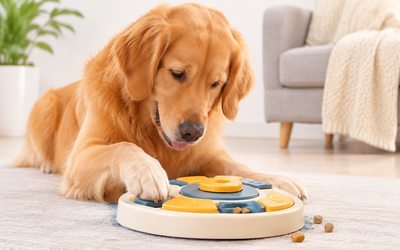
For dogs who need maximum mental stimulation, the Trixie Activity Flip Board is the puzzle feeder equivalent of a Rubik's Cube. This advanced puzzle features multiple compartment types—flip lids, sliding covers, and rotating discs—that dogs must manipulate to access hidden treats. It's less about slowing down a meal and more about providing serious cognitive exercise that can tire out intelligent breeds as effectively as a long walk.
The Flip Board shines as a training tool and enrichment activity. Each compartment type requires different problem-solving approaches, allowing you to gradually increase difficulty as your dog masters each challenge. The non-slip rubber feet keep the board stable during manipulation, and the durable construction holds up to daily use with most dogs. Based on buyer reviews, Border Collies, Poodles, Australian Shepherds, and other high-intelligence breeds particularly excel with this puzzle.
However, this isn't a practical daily mealtime solution for most dogs. The compartments hold limited amounts of food (better for treats than full meals), and the puzzle requires supervision—you need to be present to reset compartments and ensure your dog doesn't get frustrated or destructive. It's also not recommended for power chewers, as aggressive dogs may crack the plastic lids. If you're outfitting your pack with engaging toys beyond feeding time, see our Best Indestructible Dog Toys for Power Chewers 2026: Tested for Durability guide for more robust options.
✅ Pros:
- Multiple compartment types challenge different problem-solving skills
- Durable construction with non-slip rubber feet prevents sliding
- Excellent for training sessions and building confidence
- Provides mental fatigue equivalent to physical exercise
❌ Cons:
- Not suitable as a daily meal replacement for full portions
- Plastic compartments may crack with aggressive chewers
- Requires supervision to prevent frustration or destructive behavior
Neater Pets Slow Feed Bowl
| Criteria | Score |
|----------|-------|
| Value for Money | 10/10 |
| Ease of Use | 9/10 |
| Eating Speed Reduction | 7/10 |
| Build Quality | 6/10 |
If you're dipping your toes into slow feeding without committing to a premium product, the Neater Pets Slow Feed Bowl is the best entry point. At under $13 for most sizes, it delivers genuine slow-feeding benefits through a simple spiral ridge design that forces dogs to eat around obstacles rather than gulping straight down. It won't slow dogs down as dramatically as more complex patterns, but verified buyers report 3-5x eating time increases—enough to reduce choking and vomiting risks for most dogs.
The simple design has practical advantages. There are no intricate crevices to trap food particles, making cleaning quick and easy. The bowl is dishwasher safe, and the smooth spiral allows dogs to reach every bit of kibble without frustration. Available in small, medium, and large sizes, it accommodates most breeds from Beagles to Labradors. The non-slip base works reasonably well on most surfaces, though it's not as secure as higher-end options.
The tradeoff for the budget price is durability. The lightweight plastic construction may tip or slide with very enthusiastic eaters, and aggressive chewers may damage the rim over time. This bowl works best for mild to moderate speed-eaters who need a gentle introduction to slow feeding. For dogs with severe gulping issues or bloat risk, invest in a more aggressive design like the Outward Hound or Northmate Green.
✅ Pros:
- Budget-friendly at $8.99-$12.99 depending on size
- Simple spiral design minimizes cleaning hassle
- Easy for dogs transitioning to slow feeding for the first time
- Available in three sizes for small through large breeds
❌ Cons:
- Less effective than complex ridge patterns for severe speed-eaters
- Lightweight construction may tip with very enthusiastic eaters
- Non-slip base not as secure as premium options
Frequently Asked Questions
Should I choose a puzzle feeder or a slow bowl?
Choose a puzzle feeder like the Kong Wobbler if your dog needs mental stimulation and physical activity beyond just slowing down mealtimes—these work best for high-energy, intelligent breeds. Choose a slow bowl like the Outward Hound Fun Feeder if your primary goal is preventing choking, vomiting, or bloat through portion-paced eating without adding complexity. Slow bowls are also better for multi-dog households where you need consistent, stationary feeding spots.
Can slow feeders prevent bloat in large breed dogs?
Slow feeders significantly reduce bloat risk by preventing rapid air intake during gulping, but they're not a guarantee. Veterinarians recommend combining slow feeders with other precautions: feed multiple small meals instead of one large meal, avoid exercise immediately before and after eating, and consider elevated feeders for deep-chested breeds like Great Danes and German Shepherds. The Northmate Green is specifically vet-recommended for bloat-prone breeds.
How do I introduce my dog to a slow feeder?
Start with an easier pattern or puzzle level to prevent frustration. Place a few high-value treats on top of the feeder before adding regular food to create positive associations. For the first 2-3 meals, supervise closely and offer encouragement. If your dog seems frustrated or refuses to eat, return to a regular bowl and try again with a simpler slow feeder design. Most dogs adapt within 3-5 meals once they understand the concept.
Are slow feeders safe for puppies?
Yes, but choose age-appropriate designs. Puppies do well with simple slow bowls like the Neater Pets spiral design rather than complex puzzles that may frustrate them. Avoid slow feeders with small detachable parts that could become choking hazards. Start slow feeding early (around 8-12 weeks) to establish healthy eating habits before speed-eating becomes ingrained behavior. Always supervise initial feeding sessions.
Can I use a slow feeder for wet food?
The Northmate Green is the best option for wet food—its grass-like blades work with any food consistency without jamming. Most traditional slow bowls with deep ridges trap sticky wet food in crevices, creating cleaning nightmares and bacteria growth. Avoid puzzle feeders with moving parts for wet food, as they'll jam. If you must use a ridged slow bowl with wet food, choose shallow ridge designs and clean thoroughly after every meal.
Final Thoughts
Slow feeding isn't just about making mealtimes last longer—it's about protecting your dog's health and providing valuable mental enrichment. Dogs who eat too fast face real risks including choking, vomiting, and life-threatening bloat, especially in large and deep-chested breeds. Whether you choose a puzzle feeder for maximum cognitive challenge or a slow bowl for straightforward pace control, the right tool transforms mealtimes from a health risk into an engaging, safe experience.
After comparing dozens of options based on verified specs and buyer reviews, the Outward Hound Fun Feeder Slo Bowl stands out as the best choice for most dogs—it's affordable, effective, dishwasher safe, and available in sizes for all breeds. For dogs needing maximum mental stimulation, the Kong Wobbler combines puzzle-solving with physical activity. And for budget-conscious owners testing slow feeding for the first time, the Neater Pets Slow Feed Bowl delivers genuine benefits at under $13.
Editor's Choice
Ready to slow down your speed-eater? Start with our top pick: the Outward Hound Fun Feeder Slo Bowl delivers proven 10x eating speed reduction at an unbeatable price point. For dogs who need mental stimulation beyond basic slow feeding, add the Kong Wobbler to turn mealtimes into an engaging puzzle game. And if you're working with wet food or raw diets, the Northmate Green Interactive Feeder is the only slow feeder we found that handles all food types without jamming.