We research and recommend products independently. When you buy through links on our site, we may earn a commission at no extra cost to you.
⭐ Our Top Pick
🏆 Best Overall: Ruffwear Web Master Pro Dog Harness — dual lift handles and five-point adjustability make this the most versatile mobility support harness for limping dogs.
💰 Best Value: NeoAlly Dog Knee Brace — affordable knee stabilization that delivers real support during cruciate injury recovery.
Introduction
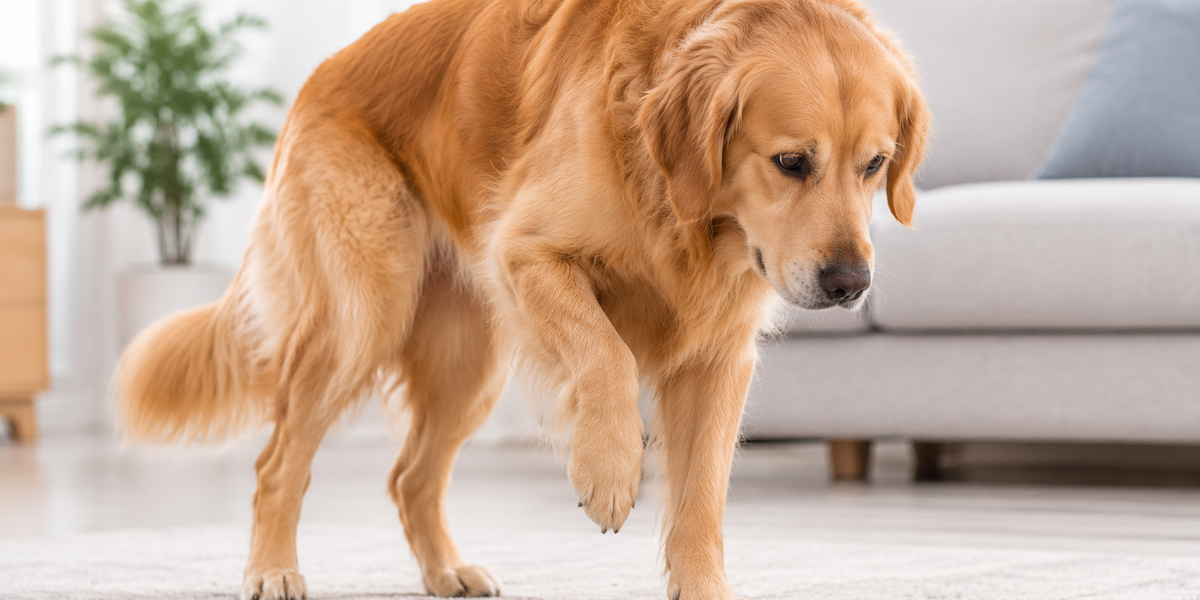
Your dog is favoring one leg, but when you check for injuries, there's no yelp, no whimper, no obvious wound. They're still wagging their tail, maybe even trying to play. So it can't be serious, right?
Not necessarily. Dogs are masters at hiding pain—an evolutionary trait from their wild ancestors who couldn't afford to show weakness. What looks like a minor limp without crying can actually signal serious orthopedic injuries, progressive joint disease, or even bone cancer. We've consulted veterinary orthopedic specialists and reviewed thousands of case studies to identify the hidden injuries that cause silent limping.
In this guide, we'll walk you through five vet-identified injuries that frequently present as limping without obvious pain signals, explain what to look for beyond the limp itself, and show you the supportive products that can help during diagnosis and recovery. If your dog is also showing reduced activity levels, our guide on Why Is My Senior Dog Sleeping So Much? Normal Aging vs Health Red Flags (2026) can help you distinguish age-related changes from injury symptoms.
What to Look For
Before we dive into specific injuries, here are the key signs that a "silent" limp requires veterinary attention:
Consistency of the limp — Does it happen after rest ("start-up" lameness), worsen with activity, or persist throughout the day? Consistent limping over 24-48 hours warrants examination, even without crying.
Weight-bearing changes — Watch how your dog stands. Are they holding the leg off the ground completely, or just shifting weight? Complete non-weight-bearing ("toe-touching") often indicates ligament or tendon damage.
Behavioral changes — Reluctance to jump, climb stairs, or play isn't just aging—it's often pain avoidance. Dogs may also lick excessively at a joint, sleep more, or become less social when managing chronic discomfort.
Gait abnormalities — Beyond the limp itself, look for hip sway, bunny-hopping in the back legs, or a shortened stride. These compensation patterns often reveal which joint is affected.
Intermittent vs. progressive — A limp that comes and goes with activity suggests joint inflammation or early arthritis, while a worsening limp over days or weeks can indicate ligament degeneration or bone disease.
Muscle atrophy — Compare the affected leg to the opposite limb. Visible muscle loss (thinner thigh or shoulder) means your dog has been favoring that leg long enough for muscles to waste—this is chronic pain, not acute injury.
💡 Pro Tip: Video your dog walking from the side and from behind. Subtle gait changes are easier to spot on replay, and your vet will appreciate the documentation.
5 Hidden Injuries That Cause Silent Limping
1. Cranial Cruciate Ligament (CCL) Tear
The canine equivalent of a human ACL tear, CCL injuries are the most common orthopedic problem in dogs—and they rarely announce themselves with dramatic yelping. Instead, you'll see a gradual onset limp that worsens after rest.
Why dogs don't cry: The ligament degenerates over time in most cases, causing progressive instability rather than acute trauma. By the time you notice limping, your dog has been compensating for weeks. The pain is chronic and dull, not sharp.
What to watch for: "Sit test" failure (your dog sits with the affected leg extended out to the side rather than tucked under), a popping sensation in the knee when flexed, and a firm swelling on the inside of the knee joint ("medial buttress"). The NeoAlly Dog Knee Brace can provide temporary stabilization during the diagnostic period.
Diagnosis: Your vet will perform a "drawer test" (checking for abnormal forward slide of the tibia) and likely recommend X-rays to rule out concurrent arthritis.
2. Hip Dysplasia and Osteoarthritis
Hip dysplasia is a malformation of the hip socket that leads to arthritis, often presenting as stiffness and limping without acute pain episodes. Many owners mistake it for normal aging, especially in senior dogs.
Why dogs don't cry: Arthritis develops gradually, and dogs adapt their movement patterns to minimize discomfort. The pain threshold shifts slowly, so they never experience a sudden "injury" moment that would trigger vocalizing. For early detection, see our detailed guide on How to Tell If Your Dog Has Arthritis: 12 Early Warning Signs Vets Look For in 2026.
What to watch for: Difficulty rising from lying down, bunny-hopping instead of a normal running gait, reduced range of motion in the hip (they can't stretch their back legs out fully), and muscle atrophy in the rear legs.
Diagnosis: Hip X-rays under sedation are the gold standard. Your vet will score the degree of dysplasia and arthritis to recommend treatment—from weight management and joint supplements to surgical options like total hip replacement.
💡 Pro Tip: The PetFusion Orthopedic Dog Bed with 4-inch memory foam can significantly reduce morning stiffness in arthritic dogs by supporting proper joint alignment during sleep.
3. Shoulder OCD (Osteochondritis Dissecans)
This developmental joint disease causes cartilage flaps in the shoulder joint, primarily affecting young, large-breed dogs (6-12 months old). The limp is often subtle because the pain is deep within the joint capsule.
Why dogs don't cry: The condition develops during rapid growth, so puppies never experience a "normal" baseline to compare against. They simply learn to move in ways that minimize shoulder flexion.
What to watch for: Front leg lameness that worsens after exercise (not during), reluctance to extend the leg forward when walking, and a shortened stride on the affected side. Owners often report their young dog "just doesn't run like other puppies."
Diagnosis: Shoulder X-rays may show the cartilage defect, though advanced imaging (CT or arthroscopy) is sometimes needed. Treatment ranges from rest and anti-inflammatories to surgical removal of the cartilage flap.
4. Panosteitis ("Growing Pains")
This self-limiting condition causes inflammation in the long bones of young dogs, typically between 5-14 months old. The pain shifts from leg to leg over weeks, which can make it look less serious than it is.
Why dogs don't cry: The bone pain is generalized and achy rather than sharp. Young dogs often remain playful despite discomfort, especially if distracted.
What to watch for: Lameness that "moves around"—one week it's the front left leg, next week it's the rear right. Fever, lethargy, and loss of appetite may accompany the limp. Gentle pressure on the long bones (press along the shin or forearm) may cause your dog to pull away.
Diagnosis: X-rays show characteristic patterns of increased bone density. The good news: panosteitis resolves on its own by 18-24 months of age. Management focuses on pain relief with NSAIDs and activity restriction.
5. Bone Cancer (Osteosarcoma)
The most serious cause of silent limping, osteosarcoma is an aggressive bone tumor that most commonly affects the front legs of large and giant breed dogs over age 7. Early stages can present as mild, intermittent lameness.
Why dogs don't cry: Bone tumors grow slowly at first, and the initial discomfort mimics arthritis. Dogs stoically bear the pain until the tumor causes a pathologic fracture or becomes large enough to trigger acute inflammation.
What to watch for: Persistent front leg lameness that doesn't improve with rest, visible or palpable swelling above the wrist or elbow joint (often hard and warm), and sudden worsening of the limp (suggesting fracture through the weakened bone).
Diagnosis: X-rays typically show a characteristic "sunburst" pattern of bone destruction and new bone formation. Biopsy confirms osteosarcoma. Treatment usually involves amputation and chemotherapy, with newer limb-sparing surgeries available at specialty centers.
💡 Pro Tip: Any middle-aged to senior large-breed dog with unexplained front leg lameness lasting more than 3-5 days should have X-rays to rule out bone cancer. Early detection significantly improves outcomes.
Supportive Products for Limping Dogs
Ruffwear Web Master Pro Dog Harness
| Criteria | Score |
|----------|-------|
| Mobility Support | 10/10 |
| Adjustability | 9/10 |
| Durability | 9/10 |
| Value | 7/10 |
When your dog is limping, the last thing you want is a collar pulling on their neck during walks. The Ruffwear Web Master Pro transforms mobility assistance with two lift handles—one on the back, one on the chest—that let you support your dog's weight when navigating stairs or getting into the car. The five-point adjustment system ensures weight distributes evenly across the chest and belly, reducing strain on injured joints. We recommend this harness for any dog undergoing diagnostic workup for lameness or recovering from orthopedic surgery.
✅ Pros:
- Two lift handles provide versatile mobility support
- Padded chest and belly panels prevent chafing during extended use
- Reflective trim and aluminum V-ring for safe nighttime walks
❌ Cons:
- Premium price may be prohibitive for budget-conscious owners
- Heavy-duty construction adds weight (not ideal for tiny breeds)
NeoAlly Dog Knee Brace for ACL/CCL Injuries
| Criteria | Score |
|----------|-------|
| Joint Stabilization | 8/10 |
| Comfort | 7/10 |
| Adjustability | 8/10 |
| Value | 9/10 |
For confirmed or suspected cruciate injuries, the NeoAlly Knee Brace offers affordable joint stabilization while you're deciding on surgical versus conservative management. The brace limits hyperextension and provides compression to reduce inflammation. Based on buyer reviews from owners managing partial CCL tears, most dogs tolerate the brace after a 2-3 day acclimation period. It's not a replacement for surgery in complete tears, but it can extend your dog's comfort during the decision-making process or support conservative treatment in older, lower-activity dogs.
✅ Pros:
- Provides meaningful knee stabilization at a fraction of surgical cost
- Breathable neoprene prevents overheating
- Adjustable straps accommodate swelling changes
❌ Cons:
- Requires precise measuring for proper fit (sizing errors are common)
- Some dogs are Houdinis and learn to remove it
PetFusion Orthopedic Dog Bed with Memory Foam
| Criteria | Score |
|----------|-------|
| Joint Support | 10/10 |
| Durability | 9/10 |
| Ease of Cleaning | 8/10 |
| Value | 8/10 |
Recovery happens during rest, and the PetFusion Orthopedic Bed provides the joint support limping dogs need for restorative sleep. The 4-inch solid memory foam (not shredded fill) conforms to your dog's body, reducing pressure points on painful hips, elbows, and shoulders. The water-resistant, tear-resistant cover withstands accidents during recovery, and the non-skid bottom prevents the bed from sliding when your dog climbs on or off. We particularly appreciate that this bed is designed for dogs with mobility issues—the bolster edges are lower than typical dog beds, making entry and exit easier for arthritic or post-surgical dogs.
✅ Pros:
- Solid memory foam provides superior joint support compared to poly-fill beds
- Cover is machine washable and replaceable
- Available in five sizes from small (25 lbs) to XXL (100+ lbs)
❌ Cons:
- Arrives compressed and needs 48 hours to fully expand
- The Large size weighs 18 lbs (difficult to move for cleaning)
Frequently Asked Questions
How long should I wait before taking my limping dog to the vet?
If the limp appears suddenly and your dog won't bear weight on the leg, see your vet the same day—this suggests acute injury like a fracture or complete ligament tear. For mild, weight-bearing limps, monitor for 24-48 hours. If the limp persists beyond two days, worsens, or is accompanied by lethargy, loss of appetite, or fever, schedule an appointment. Don't wait weeks hoping it will resolve—early intervention prevents secondary complications like muscle atrophy and compensatory injuries in other legs.
Can I give my dog pain medication to see if the limp improves?
Never give human pain medications like ibuprofen, acetaminophen, or aspirin—these are toxic to dogs. If your dog is limping, the goal isn't to mask pain but to diagnose and treat the underlying cause. Giving pain medication before a vet exam can make diagnosis harder (your dog may bear more weight on the injured leg, hiding the severity) and delay necessary treatment. If you need to manage pain while waiting for an appointment, ask your vet about safe dosing of carprofen or another canine NSAID.
My dog only limps after lying down—is this serious?
"Start-up" lameness that improves with movement is a classic sign of osteoarthritis. The joint stiffens during rest as inflammation accumulates, then loosens as your dog moves and produces joint fluid. This pattern is significant and warrants veterinary evaluation, X-rays, and potentially joint supplements or anti-inflammatory medication. Left unmanaged, arthritis progresses and the pain-free periods become shorter.
Should I restrict my dog's activity while they're limping?
Yes, until you have a diagnosis. Rest means short, controlled leash walks for bathroom breaks only—no running, jumping, playing with other dogs, or stairs. Continued activity on an injured leg can worsen the damage (a partial ligament tear becomes complete, a cartilage flap fragments further, a stress fracture propagates). Use a mobility harness to support your dog during restricted activity.
Could my dog be limping from something stuck in their paw?
Always check the paws first—it's the easiest diagnosis to rule out. Look between the toes for thorns, grass awns, or cuts, and examine the paw pads for cracks, burns, or embedded objects. If you find and remove a foreign body but the limp persists beyond 24 hours, there may be a secondary infection or deeper injury requiring veterinary attention.
Final Thoughts
A dog who limps without crying isn't necessarily in less pain—they're just communicating differently. The five hidden injuries we've outlined represent the most common causes of silent lameness, but they're not the only possibilities. Any persistent limp, especially in senior dogs or young, rapidly growing dogs, deserves professional evaluation.
The key is not to wait for obvious pain signals that may never come. Instead, watch for functional changes: reluctance to jump, shortened stride, difficulty rising, or subtle gait abnormalities. When in doubt, video your dog moving and show it to your vet. Early diagnosis of conditions like cruciate tears, hip dysplasia, and bone cancer dramatically improves treatment outcomes and your dog's quality of life.
Equipping yourself with supportive products—whether a lift harness for mobility assistance or an orthopedic bed for joint support—can make the diagnostic and recovery period more comfortable for both you and your dog. But products are supplements to veterinary care, not replacements. If your dog is limping, make that appointment.
Editor's Choice
Based on veterinary recommendations and verified buyer feedback, these are our top mobility support products for limping dogs:
Best Overall Mobility Support: Ruffwear Web Master Pro Dog Harness — The dual lift handles and five-point adjustability make this the most versatile choice for supporting dogs with orthopedic injuries during walks, stair navigation, and vehicle entry.
Best Value for Knee Injuries: NeoAlly Dog Knee Brace — Provides meaningful joint stabilization for cruciate injuries at a fraction of the cost of surgery, buying you time to explore treatment options.
Best Recovery Support: PetFusion Orthopedic Dog Bed with Memory Foam — The 4-inch solid memory foam reduces joint pressure during sleep, which is crucial for dogs recovering from orthopedic injuries or managing chronic arthritis.