Disclosure: WoofPod is reader-supported. When you buy through links on this page, we may earn an affiliate commission at no extra cost to you.
⭐ Our Top Pick
🏆 Best Overall: MidWest iCrate Folding Metal Dog Crate — The included divider panel lets the crate grow with your puppy, and the tool-free setup makes it the easiest starter crate we've found.
💰 Best Value: Amazon Basics Folding Metal Dog Crate — A no-frills folding crate with a divider and tray at a price that leaves room in the budget for treats and toys.
Introduction
Crate training is one of the most valuable skills you can teach a puppy — and one of the most misunderstood. A crate isn't a cage; used correctly, it becomes a safe den where your puppy sleeps, decompresses, and learns to hold their bladder. The American Kennel Club and most veterinary behaviorists agree that a properly sized crate, introduced gradually, is the fastest route to house-training success.
We've spent years helping new puppy parents build routines that actually stick, and the pattern is always the same: puppies who get a consistent crate schedule are house-trained weeks earlier and chew fewer shoes. If you're still shopping for gear, our guide to the Best Dog Crates of 2026: Wire, Plastic, and Soft-Sided Compared breaks down which style suits which puppy.
In this guide, we'll walk through a step-by-step crate training schedule you can start tonight, plus the crates and accessories that make the process smoother. Everything here is based on manufacturer specs, verified buyer reviews, and guidance from veterinary behavior sources — not lab testing.
What to Look For
- Correct size with a divider. Your puppy should be able to stand, turn around, and lie down comfortably — no more. A crate that's too large invites potty accidents in one corner. A divider panel lets you shrink the space now and expand it as your puppy grows.
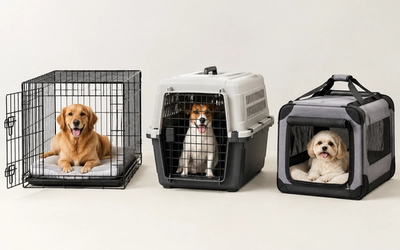
- Durable construction. Wire crates with reinforced latches are the most common choice for puppies. Plastic kennels offer more den-like privacy, while soft-sided crates are best for calm, non-chewing puppies.
- Easy-clean tray. A slide-out plastic pan is non-negotiable during house training. Look for pans with a raised lip so accidents don't leak onto your floor.
- Portability. If you travel or move the crate between rooms, a folding design with a carry handle saves a surprising amount of hassle.
- Ventilation and visibility. Puppies settle faster when they can see and smell you. Wire crates win here; plastic kennels are better for car travel and vet visits.
- Safety certifications. Look for crates that meet ASTM or similar safety standards, with no sharp edges or pinch points.
Step-by-Step Crate Training Schedule
Week 1: Build Positive Associations
Start with the crate door open and the crate in a busy room. Toss treats inside, feed meals inside, and never force your puppy in. Aim for 5–10 minute sessions, three to four times a day. By day three, most puppies will walk in voluntarily to investigate.
💡 Pro Tip: Feed every meal inside the crate for the first two weeks. Puppies learn fast when food and the crate are linked.
Week 2: Short Confinements
Close the door for 30 seconds while you sit nearby, then open it before your puppy whines. Gradually extend to 5, then 10 minutes. Pair every confinement with a high-value chew toy so the crate becomes a reward, not a punishment.
Week 3: Distance and Duration
Step out of sight for 1–2 minutes, then return calmly. Build up to 30 minutes of alone time by the end of the week. Keep departures and arrivals boring — dramatic goodbyes teach puppies that being alone is a big deal.
Week 4: Overnight and Alone Time
Move the crate to your bedroom for overnight sleep. Puppies under 12 weeks usually need one middle-of-the-night potty break. By 16 weeks, most puppies can sleep 7–8 hours without an accident.
Ongoing: The 1-Hour Rule
As a general rule, puppies can hold their bladder roughly one hour per month of age, plus one. A 3-month-old puppy can manage about four hours — never push beyond that during the day.
Product Deep-Dive
MidWest iCrate Folding Metal Dog Crate
| Criteria | Score |
|----------|-------|
| Sizing Flexibility | 9/10 |
| Ease of Setup | 10/10 |
| Durability | 8/10 |
| Value for Money | 9/10 |
The MidWest iCrate is the crate we recommend most often to first-time puppy owners, and buyer reviews back that up. The included divider panel is the standout feature — it lets you start with a small space to discourage accidents, then expand as your puppy grows. Setup takes under a minute with no tools, and the slide-out tray makes cleanup straightforward. The wire frame is sturdy for most puppies, though determined chewers may rattle it.
✅ Pros:
- Divider panel included at no extra cost
- Tool-free assembly and folding
- Slide-out tray for easy cleaning
❌ Cons:
- Limited privacy for shy puppies
- Lightweight frame can shift on hard floors
Diggs Revol Collapsible Dog Crate
| Criteria | Score |
|----------|-------|
| Portability | 10/10 |
| Build Quality | 9/10 |
| Aesthetics | 9/10 |
| Value for Money | 7/10 |
The Diggs Revol is the crate for apartment dwellers and design-conscious owners who want something that doesn't look like a wire box in the living room. It collapses flat in seconds, making it ideal for small spaces or weekend trips. The powder-coated steel frame is genuinely sturdy, and the built-in handle is a thoughtful touch. The trade-off is price — it costs significantly more than a standard wire crate.
✅ Pros:
- Folds flat for storage and travel
- Premium build quality and finish
- Available in multiple sizes and colors
❌ Cons:
- High upfront cost
- Heavier than basic folding crates
Amazon Basics Folding Metal Dog Crate
| Criteria | Score |
|----------|-------|
| Affordability | 10/10 |
| Sizing Flexibility | 8/10 |
| Ease of Setup | 9/10 |
| Durability | 7/10 |
The Amazon Basics crate is the budget pick that doesn't cut the essentials. You still get a divider panel, a removable tray, and a folding design — just with fewer size options and slightly less robust latches than pricier models. For a puppy who will outgrow their first crate in a few months, this is a smart, low-risk choice.
✅ Pros:
- Very affordable
- Includes divider and tray
- Folds flat for storage
❌ Cons:
- Fewer size options
- Latches feel less sturdy than premium crates
Petmate Sky Kennel Pet Carrier
| Criteria | Score |
|----------|-------|
| Travel Readiness | 10/10 |
| Ventilation | 8/10 |
| Durability | 9/10 |
| Value for Money | 8/10 |
The Petmate Sky Kennel is a plastic travel crate that doubles as a den-like crate for puppies who prefer enclosed spaces. It's airline-compliant with most major carriers, which makes it a smart pick if you fly with your dog. Ventilation is good on all sides, and the shell is impact-resistant. The main downside is that it's bulkier to store than a folding wire crate.
✅ Pros:
- Airline-compliant for most carriers
- Sturdy, impact-resistant shell
- Easy to assemble
❌ Cons:
- Less visibility for curious puppies
- Bulky to store
Frequently Asked Questions
How long does it take to crate train a puppy?
Most puppies accept the crate within 1–2 weeks and are fully crate trained in 4–6 weeks with consistent daily practice. Progress depends on age, breed, and how positively the crate was introduced.
Should I put a puppy in a crate at night?
Yes — overnight crate training is one of the fastest ways to house-train. Keep the crate in your bedroom for the first few weeks so you can hear your puppy's signals for a potty break.
What if my puppy cries in the crate?
A little whining during the first few nights is normal. Ignore brief protests, but never let a puppy "cry it out" for hours. Rule out potty needs, hunger, or discomfort first, then return to a calm routine.
Can I crate train an older puppy or adult dog?
Absolutely. The same gradual approach works for any age — just expect a slightly longer adjustment period for dogs who've never been crated before.
How big should a puppy crate be?
Your puppy should be able to stand, turn around, and lie down without touching the sides. Use a divider to shrink the space until they grow into the full crate.
Final Thoughts
Crate training works because it taps into a puppy's natural den instinct — but only when the crate is introduced gradually and paired with positive experiences. Follow the four-week schedule above, keep sessions short and rewarding, and you'll have a puppy who happily settles in their crate within a month.
If you're still gathering gear, start with a properly sized crate with a divider, a cozy bed, and a few high-value chew toys. For more on setting up a safe space, see our Puppy Proofing Your Home: A Room-by-Room Checklist for 2026 guide.
Editor's Choice
- 🏆 Best Overall: MidWest iCrate Folding Metal Dog Crate — the divider panel and tool-free setup make it the ideal starter crate.
- 💰 Best Value: Amazon Basics Folding Metal Dog Crate — all the essentials at a budget-friendly price.
- ✈️ Best for Travel: Petmate Sky Kennel Pet Carrier — airline-compliant and den-like for calm travel.