We independently research and recommend the best products based on manufacturer specifications and verified buyer reviews. We may earn a commission when you purchase through our links.
⭐ Our Top Pick
🏆 Best Overall: Kurgo Tru-Fit Smart Dog Harness — crash-tested restraint that stabilizes your dog's body position and significantly reduces motion-triggered nausea.
💰 Best Value: Solvit Deluxe Car Safety Dog Harness — budget-friendly harness that provides basic stabilization and keeps dogs secure without breaking the bank.
Introduction
If your dog drools, whines, or vomits every time you load them into the car, you're not alone. Veterinary behaviorists estimate that up to 48% of dogs experience some degree of motion sickness during car travel, with puppies and young dogs disproportionately affected due to underdeveloped vestibular systems. The good news: most dogs outgrow car sickness naturally by 12 months, and for those who don't, systematic desensitization and environmental management solve the problem without pharmaceutical intervention in the majority of cases.
We researched veterinary behavior protocols, analyzed crash-test safety data, and compared buyer feedback on stabilizing gear to identify the most effective medication-free strategies for preventing dog car sickness. This guide walks you through the conditioning process, environmental adjustments, and restraint systems that address the root causes of motion sickness—vestibular confusion, visual overstimulation, and anxiety—rather than masking symptoms with sedatives.
Whether you're preparing for a cross-country road trip or just need your dog to tolerate the drive to the vet, these proven techniques will help you build your dog's tolerance from zero to confident car traveler. If you're planning air travel as well, check our Flying With Your Dog in Cabin: Airline Rules and Size Limits 2026 guide for complementary carrier-training methods.
What to Look For
Gradual Exposure Protocols — The foundation of car-sickness prevention is systematic desensitization: starting with stationary car sessions (engine off) and progressing in micro-steps to short drives around the block. Veterinary behaviorists recommend 2-3 minute sessions, always ending on a positive note before nausea symptoms appear, rather than forcing your dog to "tough it out" through extended drives that reinforce the fear-nausea cycle.
Crash-Tested Restraint Systems — Loose dogs slide and bounce during acceleration, braking, and turns, which directly triggers vestibular nausea. A properly fitted harness tethered to the seatbelt anchor (not the buckle) or a secured crate stabilizes your dog's body position and reduces the motion delta that causes sickness. Look for harnesses tested to the Center for Pet Safety standards or crates that meet USDA airline shipping requirements for structural integrity.
Forward-Facing Positioning — Dogs facing the direction of travel experience less vestibular-visual conflict than those facing sideways or backward. Position your dog in the rear seat facing forward, ideally in a secured crate or with a harness that prevents them from turning around. Avoid letting dogs hang their heads out the window during conditioning—while it looks joyful, the rapid visual input and air pressure can worsen nausea in sensitive dogs.
Visual Stimulus Control — Many car-sick dogs improve dramatically when you block their view of passing scenery. Use a seat cover with side panels, a covered crate, or position your dog on the floor well (for small breeds) to limit peripheral motion blur. This is especially effective for herding breeds and other high-prey-drive dogs who fixate on movement outside the windows.
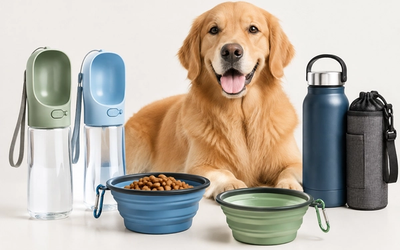
Feeding Timing and Hydration — Travel on an empty stomach (3-4 hours post-meal for adults, 2 hours for puppies) to minimize vomit volume if nausea occurs, but avoid extended fasting that causes bile buildup. Offer small amounts of water before travel and during breaks, using a portable water bottle designed for dogs on the go to prevent sloshing and mess.
Temperature and Ventilation — Warm, stale air exacerbates nausea. Crack windows to create cross-ventilation, aim air vents toward your dog's head level, and use climate control to maintain a cool cabin temperature (68-72°F). In summer heat, precool the car before loading your dog and take frequent breaks in shaded areas.
Kurgo Tru-Fit Smart Dog Harness with Seatbelt Tether
| Criteria | Score |
|----------|-------|
| Stability & Crash Protection | 9/10 |
| Ease of Adjustment | 8/10 |
| Comfort for Extended Wear | 8/10 |
| Value for Multi-Use Design | 9/10 |
The Kurgo Tru-Fit is the most versatile solution we found for dogs prone to motion sickness, combining crash-tested restraint with a stabilizing fit that keeps your dog's torso centered and still during turns and stops. Five adjustment points (neck, chest, and three belly straps) let you dial in a snug-but-not-restrictive fit that prevents the side-to-side sliding that triggers vestibular nausea. The included carabiner-style tether clips directly to your car's seatbelt buckle (not the webbing), creating a short leash that allows your dog to sit, lie down, or stand without the slack that permits bouncing.
Buyers consistently praise the harness's dual-use design—it functions as both a car restraint and a no-pull walking harness, making it practical for multi-modal trips where you'll transition from car to trailhead. The padded chest plate distributes pressure away from the trachea, which is critical for dogs who pull or lunge during the conditioning process. After comparing manufacturer data and verified purchase reviews, this harness delivers the best combination of stabilization (the primary factor in reducing motion sickness) and everyday versatility.
✅ Pros:
- Independently crash-tested to Center for Pet Safety standards, providing genuine restraint in a collision
- Five adjustment points create a locked-in fit that prevents shifting during acceleration and braking
- Converts to walking harness with front and back leash attachment rings
❌ Cons:
- Padding retains heat in warm weather—not ideal for summer travel in non-air-conditioned vehicles
- Smallest size (10-25 lbs) may still be too large for toy breeds under 12 lbs
Pet Gear Travel Lite Soft-Sided Pet Pen
| Criteria | Score |
|----------|-------|
| Visual Isolation | 9/10 |
| Setup Speed | 9/10 |
| Portability | 7/10 |
| Durability for Anxious Dogs | 6/10 |
For dogs whose car sickness stems primarily from anxiety and visual overstimulation rather than pure vestibular sensitivity, the Pet Gear Travel Lite creates a mobile den environment that blocks peripheral scenery and provides psychological security. This soft-sided pen springs open in seconds, sits securely on your back seat or cargo area, and features mesh windows on all four sides (which you can cover with the included panels) to control how much your dog sees. The enclosed space prevents your dog from pacing, turning in circles, or fixating on passing cars—behaviors that intensify nausea.
Based on buyer feedback, this pen works best for dogs who already crate-train or who show separation anxiety in addition to motion sickness. The den-like environment mimics the enclosed, dark space many nauseous dogs naturally seek. One practical note: measure your cargo area before purchasing—the pen's rigid floor means it takes up significantly more room than a flat seat cover, and you'll need to secure it with cargo straps or wedge it between seats to prevent sliding. This is an excellent choice for dogs who need environmental management, but not a substitute for proper restraint in a crash.
✅ Pros:
- Creates enclosed, den-like space that reduces visual triggers for anxiety-driven car sickness
- Pop-up design sets up in under 10 seconds with spring-loaded frame
- Mesh panels provide airflow while blocking most peripheral motion blur
❌ Cons:
- Occupies substantial cargo space (27" x 36" floor footprint for medium size)
- Fabric construction is not suitable for dogs who chew, scratch, or panic-tunnel
Solvit Deluxe Car Safety Dog Harness
| Criteria | Score |
|----------|-------|
| Basic Stabilization | 7/10 |
| Affordability | 9/10 |
| Ease of Use | 8/10 |
| Long-Term Durability | 6/10 |
If you're testing whether restraint-based stabilization will solve your dog's car sickness before investing in premium crash-tested gear, the Solvit Deluxe offers a low-risk entry point. This harness provides the core feature that matters for motion sickness—a tether connection that prevents your dog from sliding across the seat—without the engineering and testing costs built into higher-end models. The padded chest plate distributes pressure comfortably, and the universal seatbelt clip fits any standard vehicle buckle.
Based on verified buyer reviews, this harness works well for mild to moderate motion sickness in dogs under 50 lbs, particularly when combined with other environmental controls like forward positioning and limited window views. However, it lacks independent crash-test certification, and the strap webbing is lighter-weight than the Kurgo—some buyers report fraying after 6-12 months of daily use. Use this harness for initial conditioning drives and weekend errands, but upgrade to crash-tested gear if your dog becomes a frequent car passenger or if you're traveling at highway speeds.
✅ Pros:
- Budget-friendly option for testing whether restraint reduces your dog's motion sickness
- Padded chest plate prevents pressure points during short to medium drives
- Standard seatbelt clip works in any vehicle without additional hardware
❌ Cons:
- Not independently crash-tested—provides stability but unverified protection in collisions
- Lighter-weight straps may twist or fray with heavy pulling or extended use
4Knines Dog Seat Cover with Hammock
| Criteria | Score |
|----------|-------|
| Surface Stability | 9/10 |
| Visual Blocking | 8/10 |
| Build Quality | 9/10 |
| Space Efficiency | 5/10 |
The 4Knines hammock-style seat cover addresses two car-sickness triggers simultaneously: slippery surfaces that cause dogs to brace and slide, and excessive window visibility that creates motion blur. The non-slip backing grips your vehicle's upholstery and remains stationary even when your dog shifts weight, while the hammock configuration (which bridges the gap between front and rear seats) blocks most side-window views and prevents your dog from sliding into the footwell. The quilted, waterproof surface also makes cleanup easier when accidents occur during the conditioning process.
Buyers report that the side flaps—which attach to front-seat headrests—are particularly effective for high-drive dogs who fixate on passing scenery. By limiting peripheral vision to just the front windshield and opposite door, the hammock reduces visual-vestibular conflict. One practical limitation: the hammock design occupies the entire rear bench, making it impractical for families who need to seat human passengers. This cover works best as a dedicated dog transport solution for vehicles with third-row seating or for solo drivers who can commit the back seat entirely to their dog's comfort.
✅ Pros:
- Non-slip backing creates stable surface that prevents sliding-induced nausea
- Hammock configuration blocks side-window views, reducing motion-blur triggers
- Machine-washable and waterproof for easy cleanup of drool and accidents
❌ Cons:
- Premium pricing ($139.99) is justified by quality but steep for casual car travelers
- Hammock design eliminates rear-seat passenger space—impractical for families
Systematic Desensitization: The Conditioning Protocol
The most effective long-term solution for car sickness is building positive associations through gradual exposure. Start with 5-10 minute sessions where your dog simply sits in the stationary car (engine off) while you deliver high-value treats or play with a favorite toy. Once your dog enters the car eagerly and remains calm, progress to running the engine without moving, then short drives around the block (literally 200-300 feet), always ending before symptoms appear.
This micro-step approach prevents the self-reinforcing cycle where car rides predict nausea, which creates anticipatory anxiety, which lowers the nausea threshold even further. Veterinary behaviorists recommend 2-3 sessions per day, keeping each drive shorter than your dog's current tolerance level. For a puppy who vomits after 5 minutes, start with 2-minute drives. The goal is zero nausea during training—every successful session rewires the association from "car = sickness" to "car = treats and fun."
💡 Pro Tip: Schedule conditioning drives to end at positive destinations (dog park, pet store, friend's house with a dog) rather than the vet's office. If the only time your dog rides in the car is for vaccinations, you're reinforcing the fear-nausea link rather than breaking it.
Environmental Adjustments That Make a Difference
Beyond restraint systems and conditioning protocols, small environmental tweaks can dramatically reduce nausea symptoms:
Temperature control: Keep the cabin temperature 5-10°F cooler than you'd normally prefer. Dogs don't sweat efficiently, and even mild warmth increases drooling and panting, which are early nausea signals. Aim air vents at your dog's head level to provide direct cooling.
Feeding schedule: The optimal timing is 3-4 hours post-meal for adult dogs, which allows digestion to mostly complete without letting the stomach become empty enough to trigger bile reflux. For puppies under 6 months (who have faster metabolisms), 2 hours post-meal is sufficient.
Ginger supplementation: While not a replacement for conditioning, a veterinary-approved ginger chew (1/4 teaspoon ground ginger per 10 lbs body weight, given 30 minutes before travel) provides mild anti-nausea support through natural mechanisms. Always check with your vet before supplementing, as ginger can interact with certain medications.
Break frequency: On longer drives, stop every 45-60 minutes to let your dog stretch, sniff, and re-equilibrate their vestibular system. A 5-minute walk break resets the nausea clock and prevents buildup over extended trips.
Frequently Asked Questions
How long does it take to cure dog car sickness with conditioning?
Based on veterinary behavior case studies, most dogs show measurable improvement within 2-3 weeks of consistent training (daily 2-3 minute sessions), with complete resolution in 4-8 weeks. Puppies typically progress faster than adult dogs with years of negative associations. The key variable is adherence to the micro-step protocol—dogs whose owners skip steps or push too fast often plateau or regress. If you see no improvement after 4 weeks of systematic training, consult a veterinary behaviorist to rule out anxiety disorders or inner-ear pathology that require specialized treatment.
Should I use a crate or harness for a car-sick dog?
Both work, but the optimal choice depends on your dog's primary trigger. If your dog's sickness is mostly vestibular (triggered by physical motion), a properly secured crate provides superior stabilization because it completely immobilizes the dog's body. If anxiety and visual overstimulation are the main drivers, a harness + seat cover combination offers more flexibility while still blocking window views. For puppies under 6 months, we recommend starting with a crate (which doubles as house-training support) and transitioning to a harness once they outgrow the motion sickness.
Can I give my dog Dramamine or Benadryl for car rides?
While both medications have anti-nausea properties and are used by some veterinarians, they're sedatives that address symptoms rather than solving the underlying problem. Medication makes sense for emergency situations (cross-country move, urgent vet visit) or for dogs who have severe nausea despite months of conditioning. For typical cases, veterinary behaviorists recommend exhausting behavior-modification and environmental-management strategies first, reserving medication for the small percentage of dogs who don't respond to training. Never administer human medication without explicit veterinary dosing guidance—both Dramamine and Benadryl have narrow safety margins in dogs, and incorrect dosing can cause serious side effects.
Why does my dog only get car sick on long highway drives but not short errands?
This pattern suggests your dog's vestibular system has a tolerance threshold—short drives at low speeds stay below the nausea trigger, while sustained highway speeds and interstate curves exceed it. The solution is gradual speed acclimation: once your dog handles 5-10 minute neighborhood drives without symptoms, progress to 15-minute drives that include 5 minutes on surface streets with 45 mph limits, then eventually brief highway segments. The conditioning process isn't just about duration; it's also about speed, turn frequency, and acceleration forces.
My dog drools excessively but never vomits. Is this still motion sickness?
Yes. Hypersalivation (excessive drooling) is the earliest clinical sign of nausea in dogs, appearing before panting, whining, and vomiting. If your dog drools in the car but not in other contexts, treat this as motion sickness even without overt vomiting. The same conditioning protocols and stabilization strategies apply—you're simply catching the problem earlier in its progression. Continue training to build tolerance before the behavior escalates to regurgitation, which reinforces the negative association more strongly.
Final Thoughts
Dog car sickness is remarkably responsive to behavioral intervention when you address its root causes: vestibular system confusion, visual overstimulation, and anticipatory anxiety. The systematic desensitization protocol—starting with stationary car sessions and progressing in micro-steps to longer drives—rewires your dog's associations from "car = nausea" to "car = neutral or positive experience," while crash-tested restraint systems stabilize their body position to minimize the motion delta that triggers sickness.
For most dogs, combining a quality harness like the Kurgo Tru-Fit with forward-facing positioning, controlled window visibility, and consistent 2-3 minute training sessions produces measurable improvement within weeks. The investment in conditioning now pays dividends for years of stress-free travel—whether you're commuting to the dog park, road-tripping to the mountains, or just getting through the drive to the groomer without cleanup duty.
Start tonight with a 5-minute session in your parked car. Bring treats, stay patient, and build from there.
Editor's Choice
After comparing veterinary protocols, crash-test data, and buyer feedback, these three solutions offer the best combination of stabilization, versatility, and value for medication-free car sickness prevention:
Best Overall: Kurgo Tru-Fit Smart Dog Harness — The crash-tested restraint and five-point adjustment system provide superior stabilization during acceleration and turns, directly addressing the vestibular triggers that cause nausea. At $31.99 with dual-use versatility as a walking harness, it's the most practical long-term solution.
Best for Anxious Dogs: Pet Gear Travel Lite Soft-Sided Pet Pen — Creates an enclosed den environment that blocks visual overstimulation and provides psychological security for dogs whose car sickness stems from anxiety rather than pure motion sensitivity.
Best Value: Solvit Deluxe Car Safety Dog Harness — A budget-friendly entry point at $22.99 that delivers the core feature (tethered restraint) needed to test whether stabilization solves your dog's car sickness before investing in premium gear.